
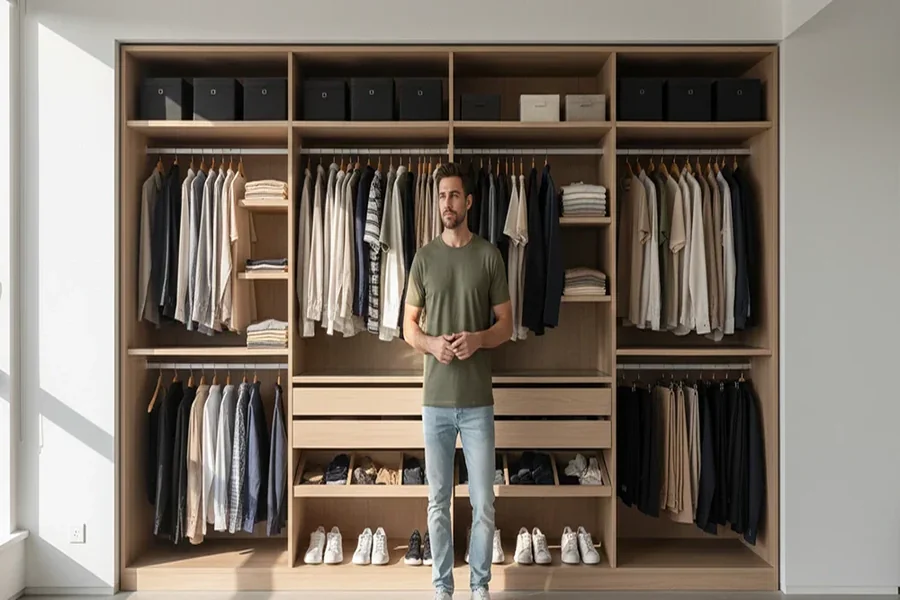
There is a quiet revolution happening in how thoughtful men approach their closets. Instead of chasing every trend and accumulating more and more clothing that never gets worn they are stripping back — keeping only what is genuinely useful and excellent and letting go of everything else. Minimalist wardrobe essentials for men are not about having nothing. They are about having exactly the right things and wearing them with confidence and intention.
The Philosophy Behind Minimalist Dressing
Minimalism in fashion is rooted in the same principles as minimalism in other areas of life — clarity focus and the removal of unnecessary complexity. When you open your wardrobe and everything in it is something you genuinely love and regularly wear getting dressed becomes effortless. There is no paralysis no settling for something that is almost right.
Decision fatigue is real and it is surprisingly draining. Studies suggest that high-achieving people often simplify choices in areas like food and clothing specifically to preserve mental energy for more important decisions. A well-curated minimalist wardrobe effectively removes a daily cognitive burden. You start the day with clarity instead of confusion.
Build Your Foundation With Quality Basics
The foundation of any minimalist wardrobe is a set of high-quality basics in neutral colors. These are the pieces that work with everything and never go out of style. White crew neck and V-neck t-shirts in good quality cotton are non-negotiable starting points. Grey navy and white are the most versatile colorways for tops.
Invest more in these basics than you might initially feel comfortable with. A well-made heavyweight cotton t-shirt costs more than a fast-fashion alternative but it will keep its shape wash after wash and last years rather than months. Over time quality basics are dramatically more cost-effective and the improved fit and drape are immediately apparent.
The Perfect Denim and Trousers Situation
A minimalist wardrobe for men typically includes two or three pairs of trousers that cover the range of life’s contexts. A pair of dark straight-leg jeans works from casual to smart-casual with ease. A pair of well-fitted chinos in a neutral like stone or navy bridges the gap between casual and business casual. A pair of formal trousers completes the trio for occasions that require dressing up.
The key in choosing these pieces is fit above everything else. A perfectly fitting pair of less expensive trousers will always look better than an ill-fitting premium pair. Take the time to find cuts that work for your specific body proportions and if needed invest in basic tailoring alterations — the improvement in appearance is worth every penny.
Outerwear That Works Across Seasons
Outerwear is where many minimalist wardrobes save significant money through smart choices. Instead of owning separate jackets for every scenario select two or three pieces that cover most situations. A quality wool overcoat in charcoal or navy is extraordinarily versatile — it elevates any outfit underneath and works across most occasions. A quality leather or quality synthetic alternative jacket adds more casual versatility.
For active or genuinely wet weather a well-made waterproof shell jacket in a neutral color rounds out the outerwear selection. Three jackets handled thoughtfully cover almost every situation most men encounter. This is a significant reduction from the cluttered jacket collection most wardrobes contain.
Footwear — The Minimalist Sweet Spot
Shoes are often where minimalism feels most challenging because men accumulate footwear at a striking rate. But most men genuinely need fewer pairs than they own. A quality white leather sneaker covers casual occasions and works surprisingly well with smart-casual outfits. A clean Derby or Oxford shoe in dark brown or black handles business and formal occasions. A Chelsea boot in suede or leather covers the middle ground with elegance.
Those three pairs genuinely cover the overwhelming majority of occasions most men face. If you have specific lifestyle needs — like specialized athletic footwear or hiking boots — add those for their specific purpose rather than as fashion pieces.
Color Palette and the Power of Neutrals
The reason a minimalist wardrobe creates so many outfit options from so few pieces is the deliberate use of a controlled color palette. When everything you own is in complementary neutral tones everything goes with everything. Navy white grey black camel and olive are the workhorses of minimalist menswear.
Adding one or two accent colors — perhaps burgundy or terracotta — gives your wardrobe personality without compromising the interchangeability of pieces. The key is restraint. Every item you add should work with at least five other items you already own. If it does not it does not belong in a minimalist wardrobe.
Final Thought
Building minimalist wardrobe essentials for men is not a one-time purchase — it is an ongoing practice of curation and intentionality. Start by editing ruthlessly what you already own. Then replace worn-out basics gradually with better quality versions. Give yourself time to truly understand what you reach for most. The wardrobe you end up with will be smaller than what you have now and infinitely more useful. Less genuinely is more.
FAQs
Q: How many items should a minimalist wardrobe have? A: There is no magic number. A functional minimalist wardrobe might contain thirty to fifty pieces including shoes and outerwear. The goal is not a specific count but ensuring every item earns its place by being genuinely worn and appreciated.
Q: Is a minimalist wardrobe expensive to build? A: Building quality takes investment upfront but costs less over time because quality pieces last far longer. Start by editing what you already own then replace items gradually with better quality versions as budget allows.
Q: Can a minimalist wardrobe include color? A: Absolutely. A minimalist wardrobe is defined by intentionality not by exclusively wearing grey and navy. If color makes you genuinely happy include it thoughtfully. The key is ensuring your colors work together rather than creating pieces that only pair with one outfit.
Q: How do I get rid of clothes I no longer want? A: Sell wearable items on platforms like Depop or Facebook Marketplace. Donate items in good condition to local charities or clothing drives. Recycle damaged items through textile recycling programs that many clothing stores now offer.
Q: How do I stop buying unnecessary clothes after building a minimalist wardrobe? A: Implement a one-in one-out rule. Before buying anything new identify what it would replace. Wait thirty days before purchasing anything non-essential. This cooling-off period eliminates most impulse purchases naturally.
